Verizon / NFL / 2026
Verizon He Is Back
Illustrated CGCharacter DesignAI Pipeline
Verizon / NFL / 2026
Overview
Football coming back is a feeling before it is a fixture, and the film plays it as one long exhale: a face surfacing through ice, a quarterback in the tunnel light, a family and a dog on the couch waiting for kick off. It was built as illustration rather than photography, which meant every character had to be designed and sheeted before a single frame could move.
The film
The same thirty seconds ran twice. The cut, the cast and the world are identical; only the middle changes, where the offer does. That split is not arbitrary: Verizon gave fans two ways to claim NFL Sunday Ticket from YouTube, either by switching home internet or by taking a phone, so the film needed to end in two places. One version carries Fios, the other Mobility, and both close on the same card. Building it once and swapping a single passage is why two versions cost barely more than one.
Three passes
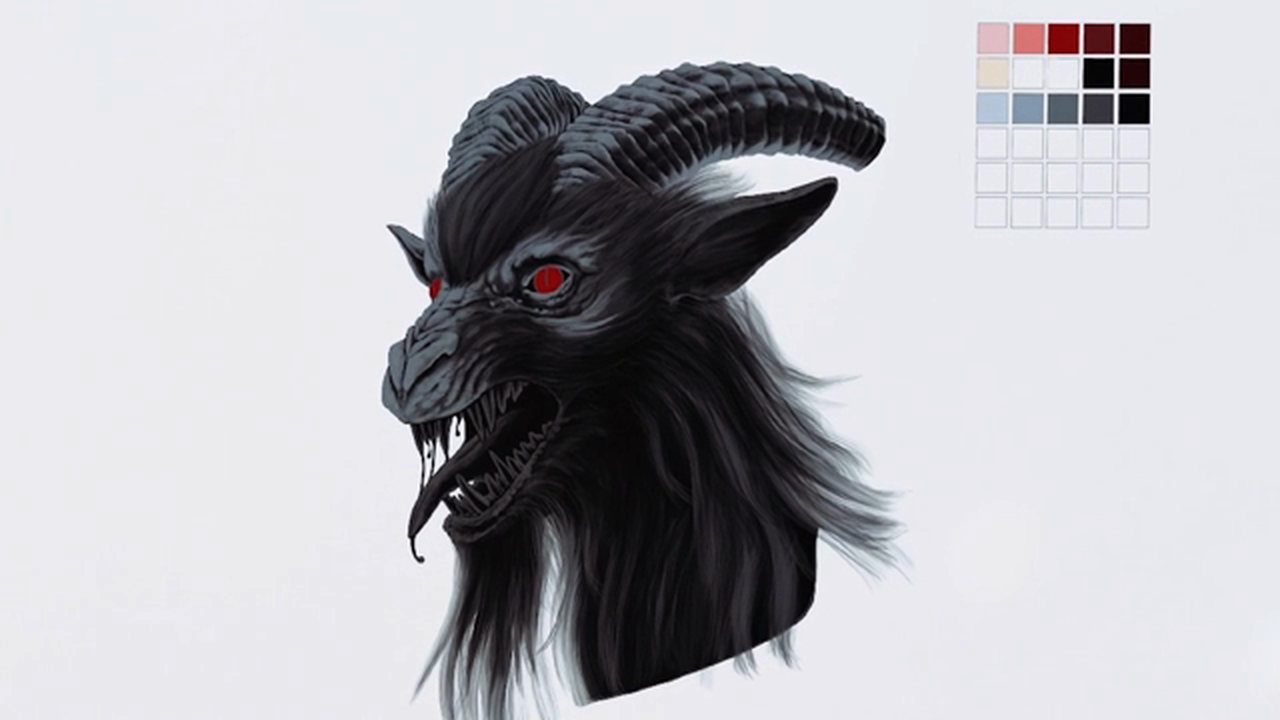
Every shot went through the same three stages. A line board that fixes the geometry and nothing else. A painted styleframe that settles palette and light. Then the render. The order matters: the drawing comes first, and everything after it answers to the drawing. Not all of it survives, and the ice frame below is one that did not make the final cut.
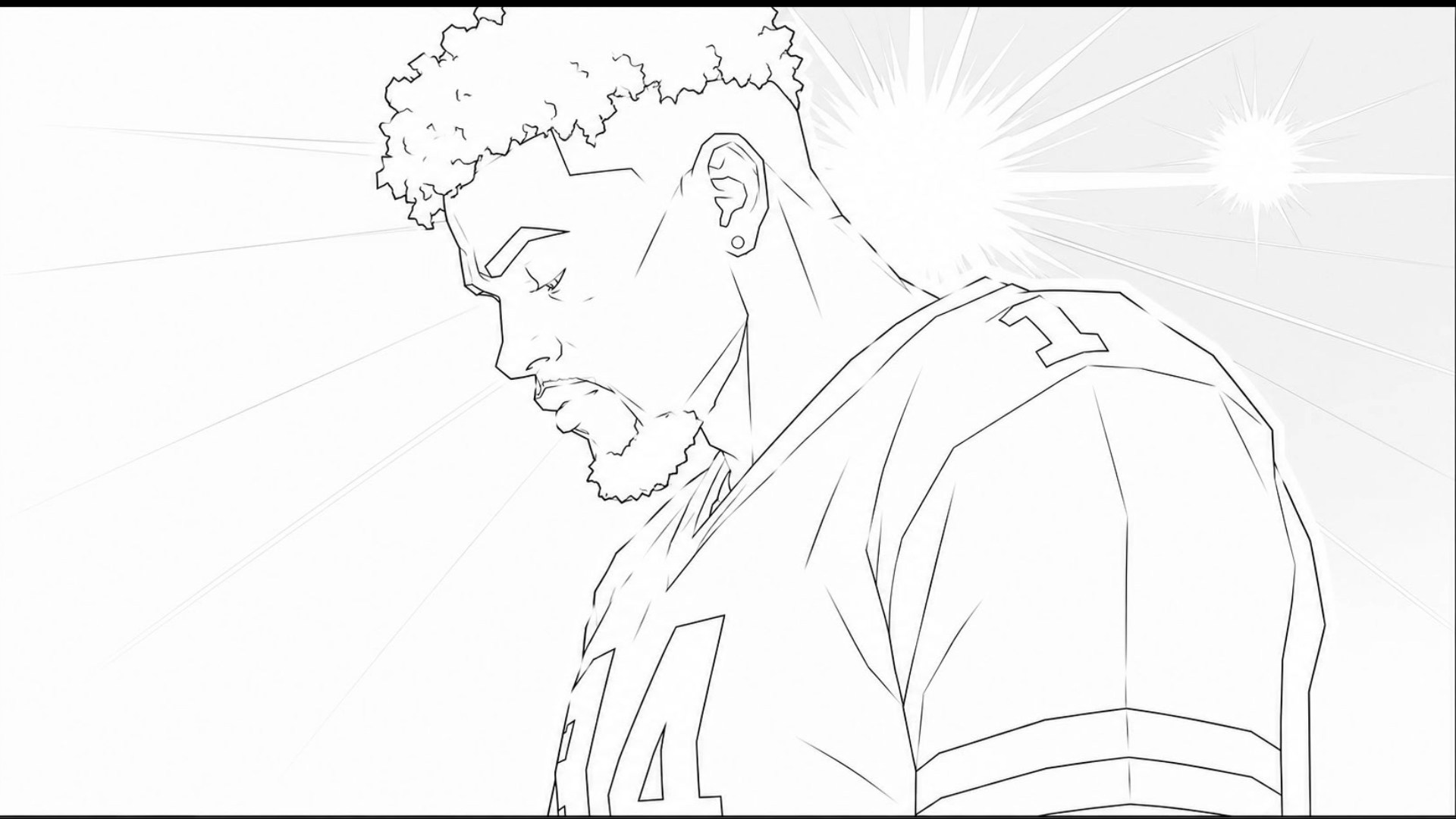
The board. Geometry, nothing else

A styleframe. This one was explored and dropped

The film
The rewrite
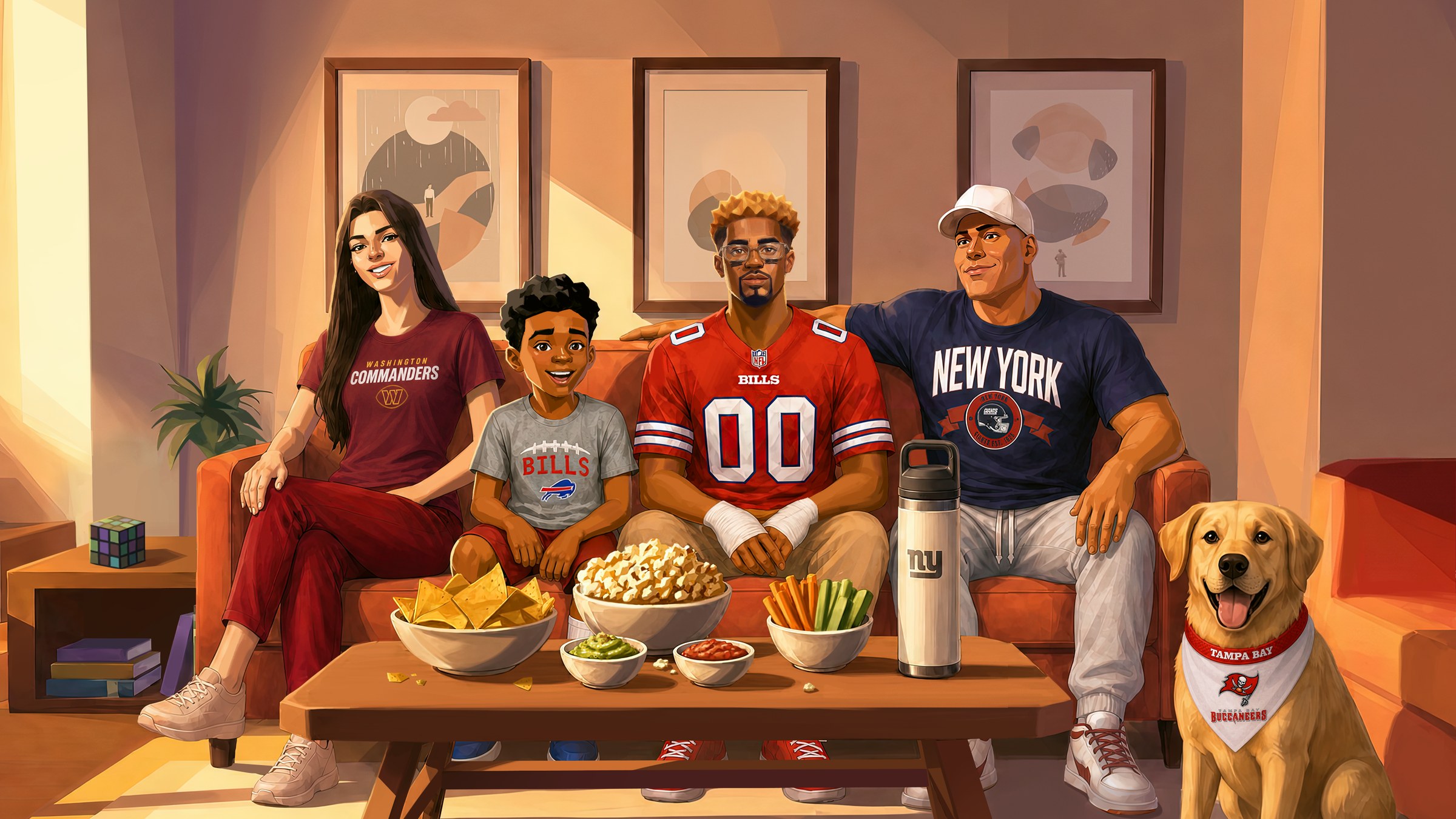
The first script was a single fan alone in front of the game. He was designed, his dog was sheeted, his snacks were drawn. Then the script changed and the film became a family: a wife, a son, a grandfather, the same dog, one couch between them. Everything below was built for a version that never shot. It is not waste. Designing the one man is what made the family arrive fully formed a week later.
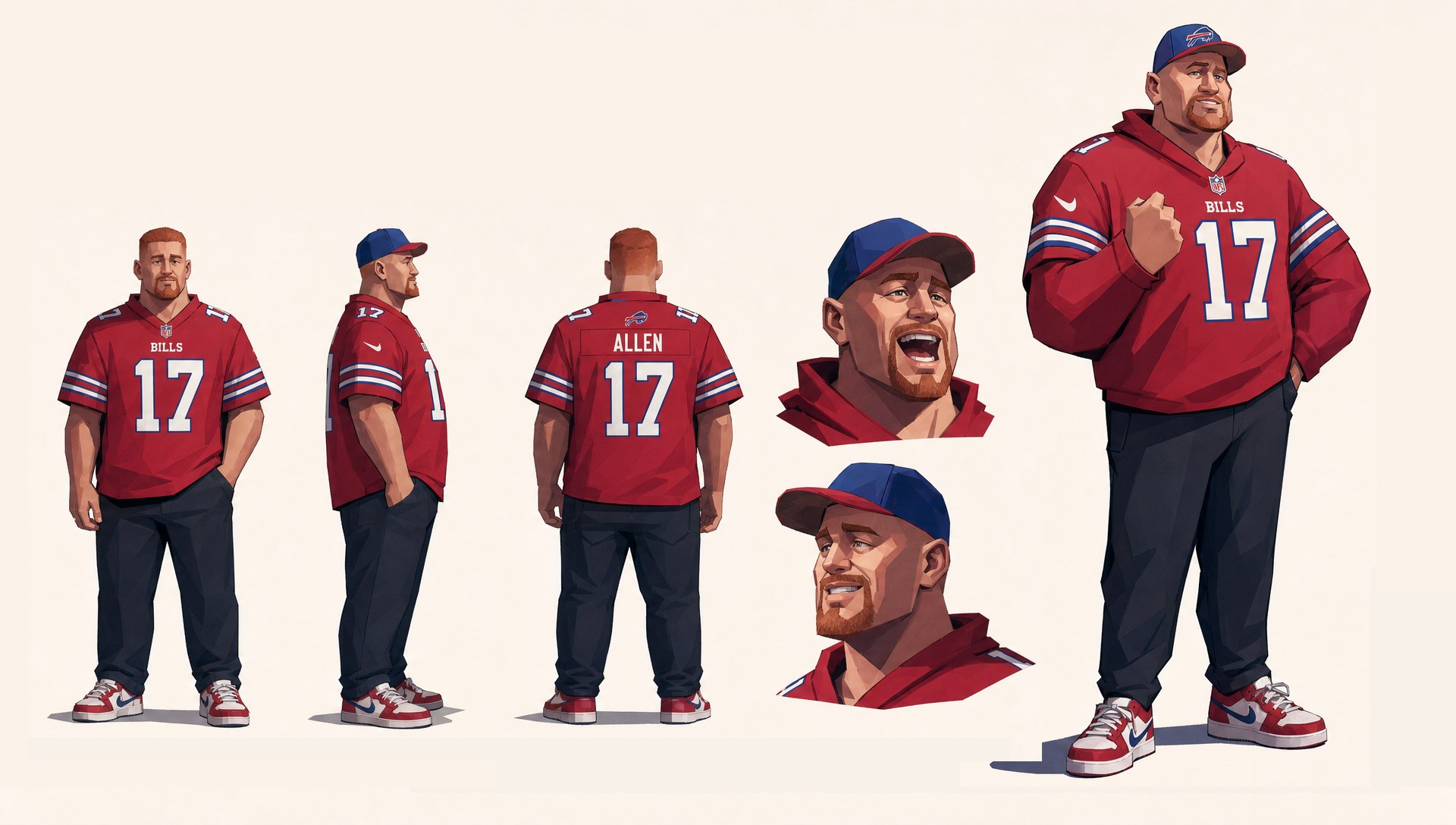
The couch man, designed and dropped

His dog, sheeted for a film that changed
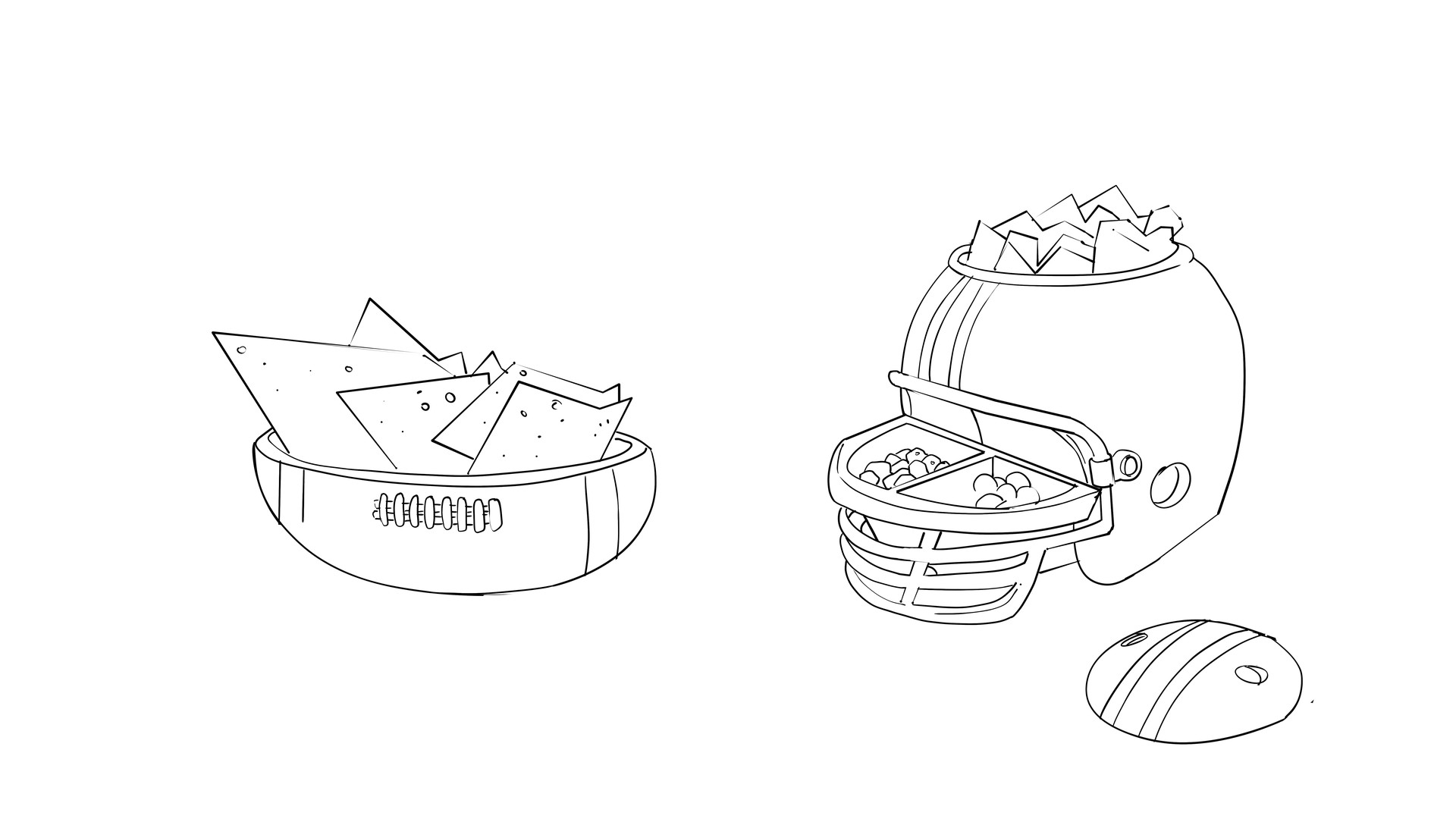
Even the snacks were drawn
Where it landed. One couch, four people and the dog
The cast
Five characters were designed properly, with turnarounds and expression sheets, the way you would sheet a cast for animation. That is what keeps a face the same face from shot ten to shot one hundred and fifty, and it is the first thing skipped when a pipeline is asked to go fast. The dog has a sheet too.
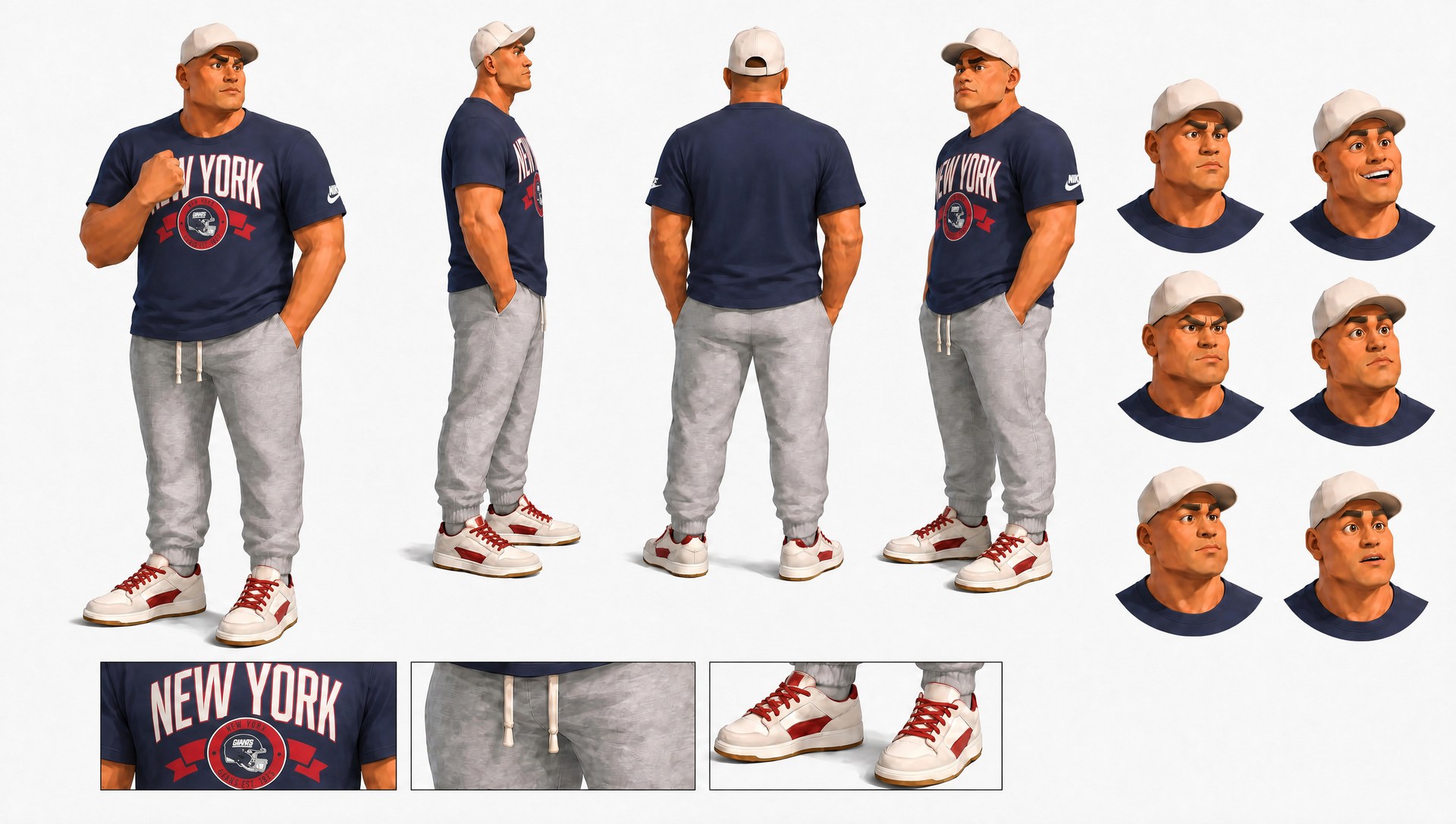
Larry, turnaround and expressions
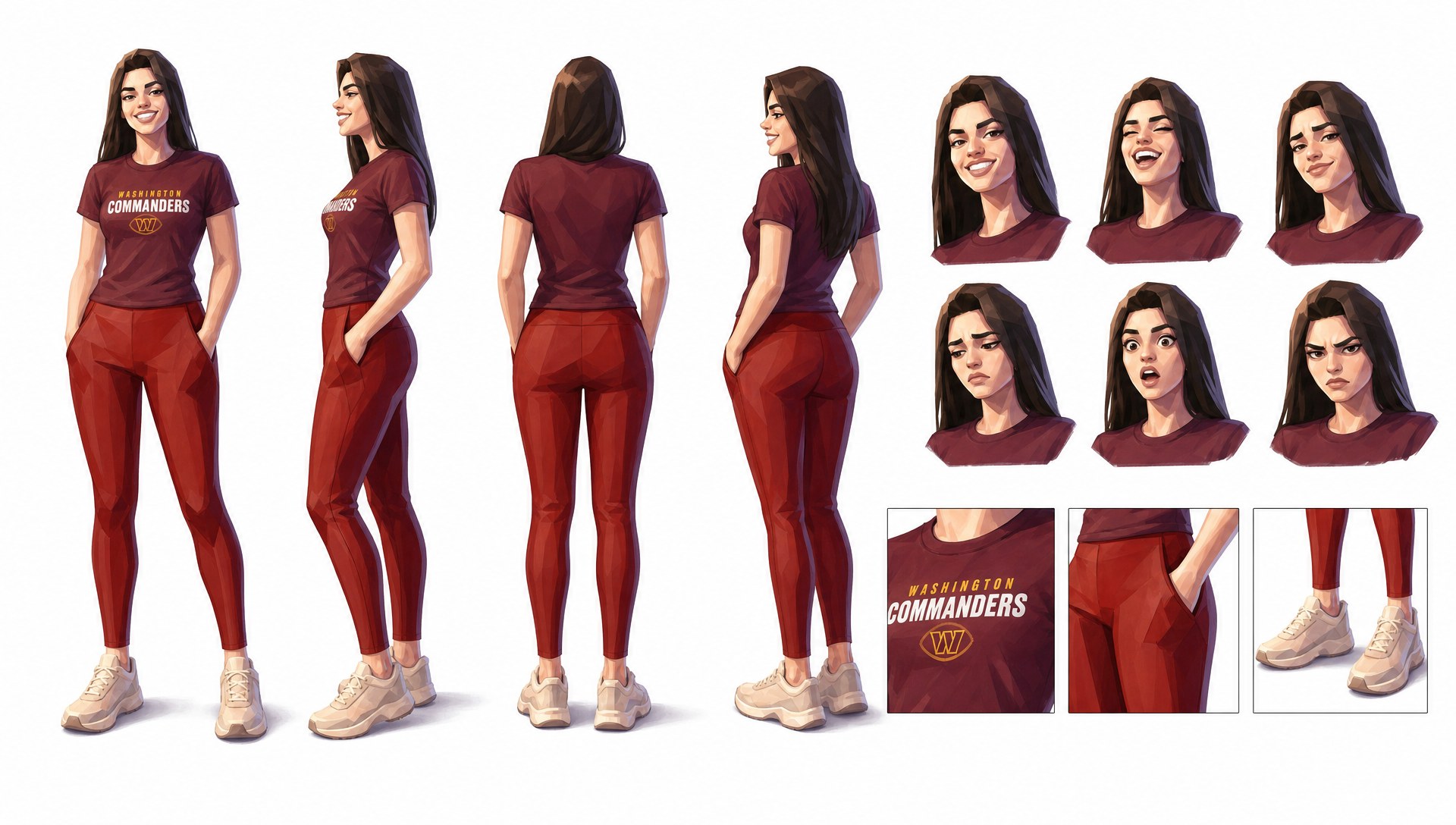
Gabby
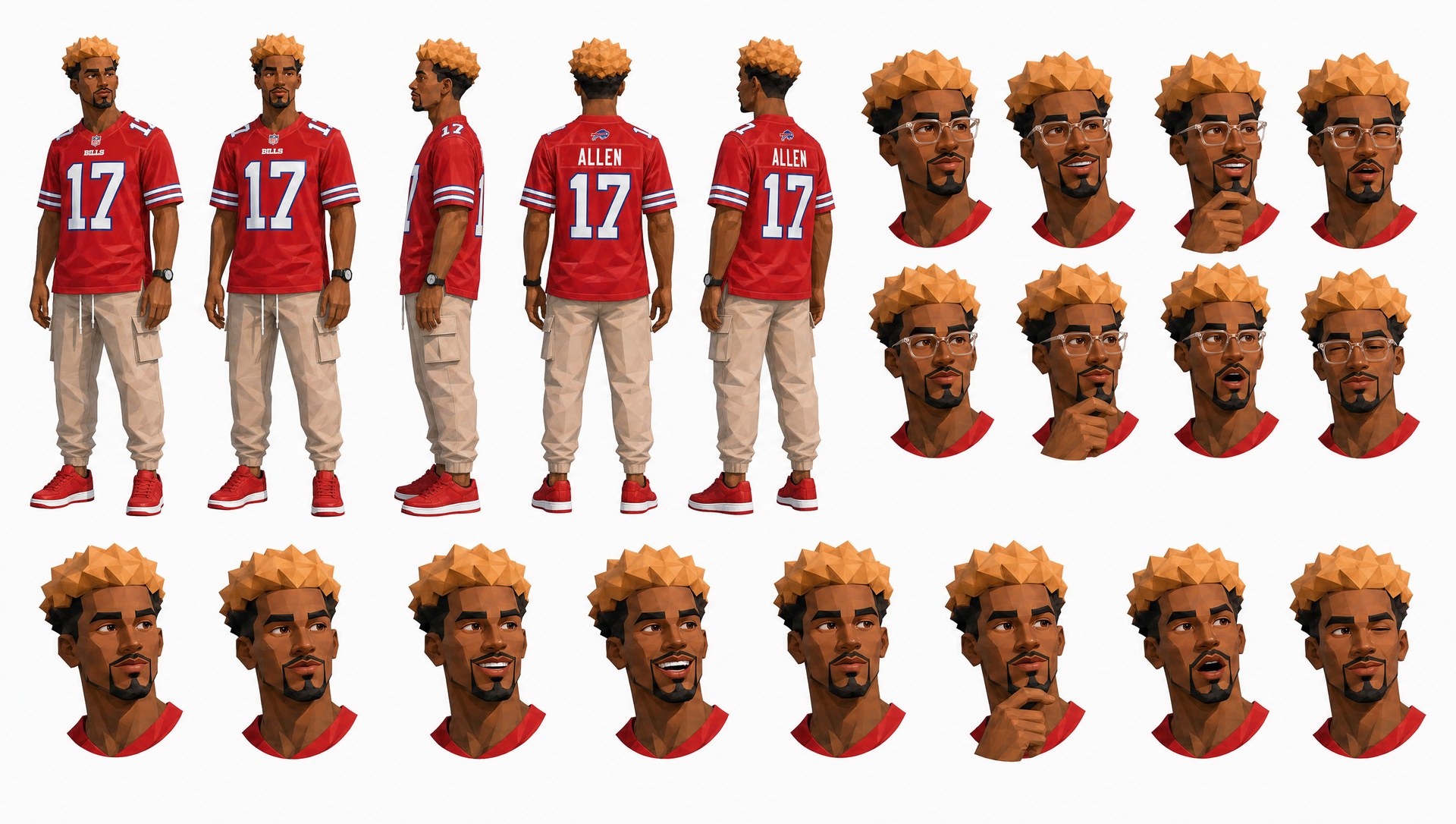
Derrick
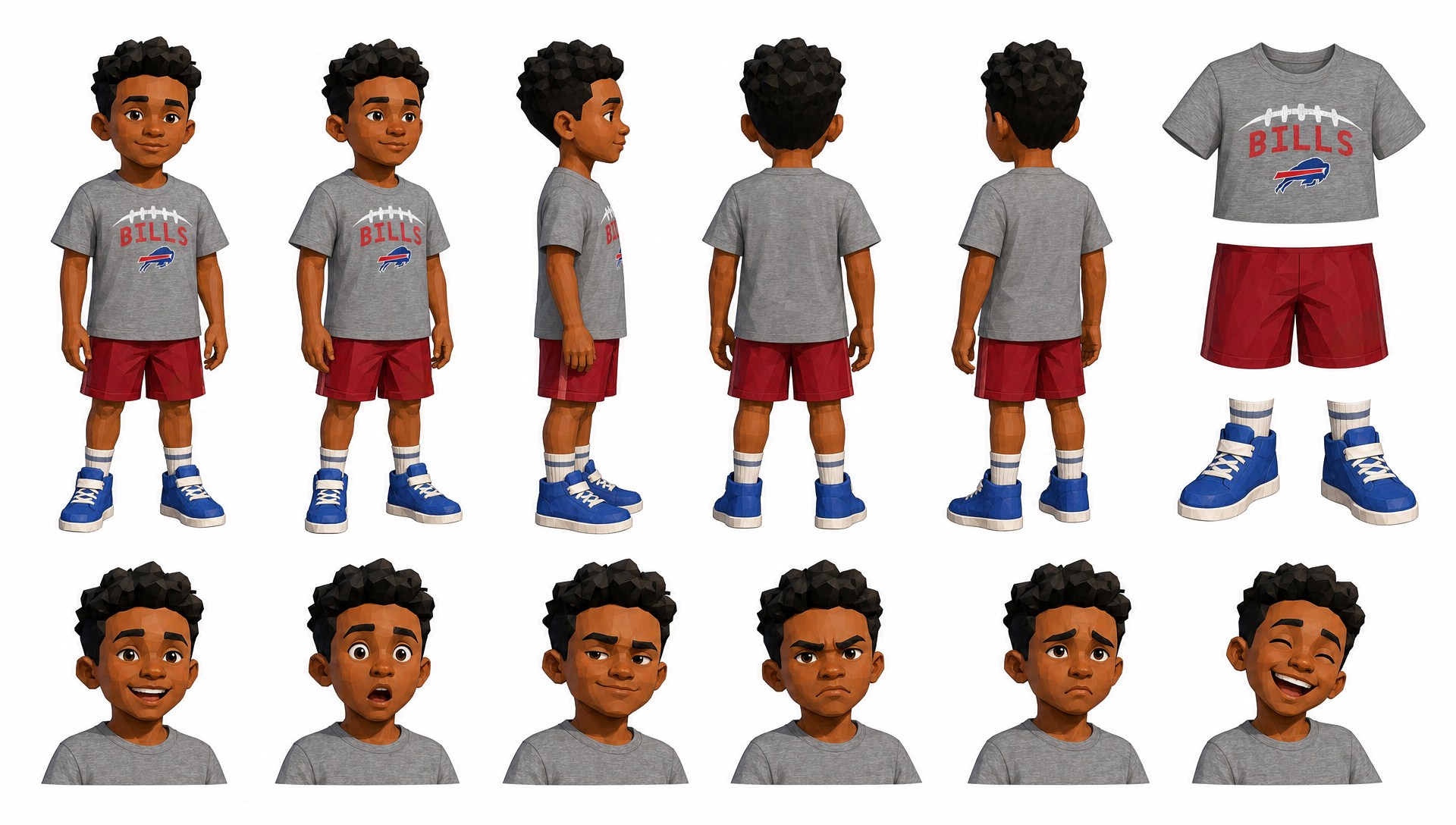
Mateo
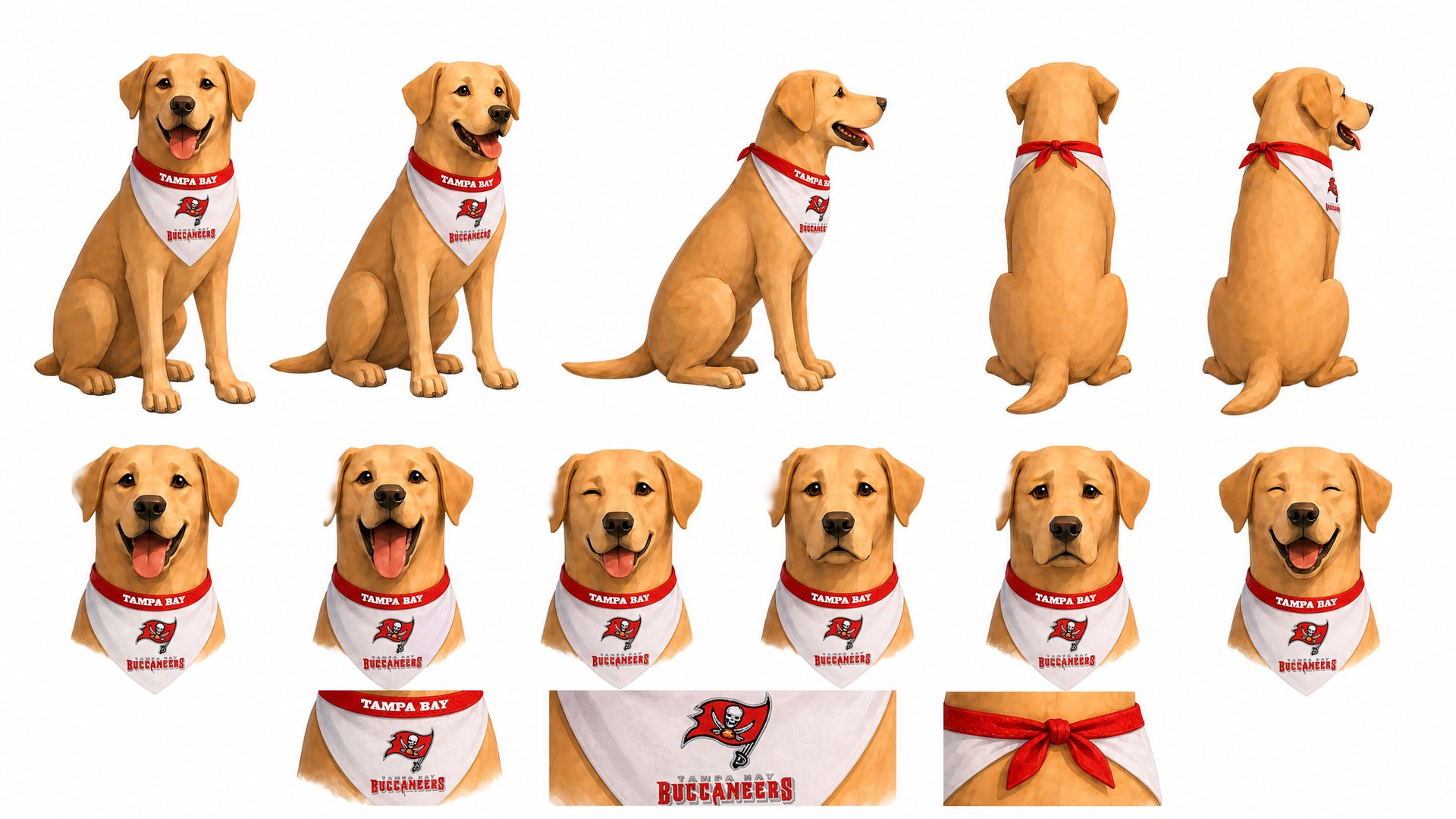
Tackle. The dog gets the same treatment
The build
First styleframe on 21 July, final delivery on 5 August. The script changed partway through, which is why the folder holds eight numbered online versions and a set of styleframes that were explored and never used. Fifteen shots, each with its own frames and backgrounds, eleven rounds of retouch on the base plates. An AI pipeline carried the volume. The character sheets and the boards are what let the film absorb a rewrite without losing itself.
15
days from first styleframe to final delivery
15
shots, sh010 through sh150
5
characters sheeted with full turnarounds
8
online versions, across a script change
Counts taken from the production folder, where every styleframe, shot and online version is filed by date.
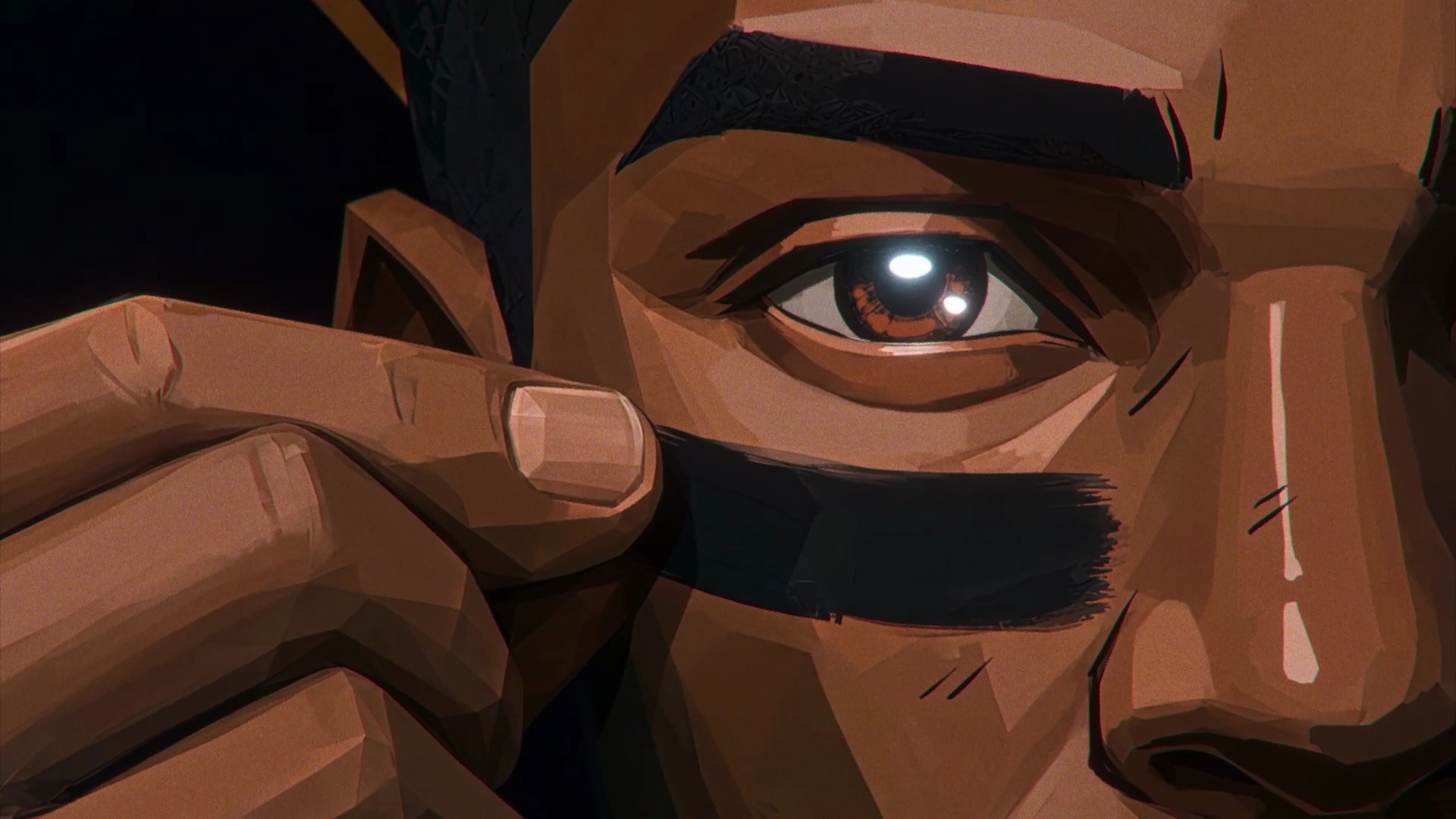
Close enough to see the facets
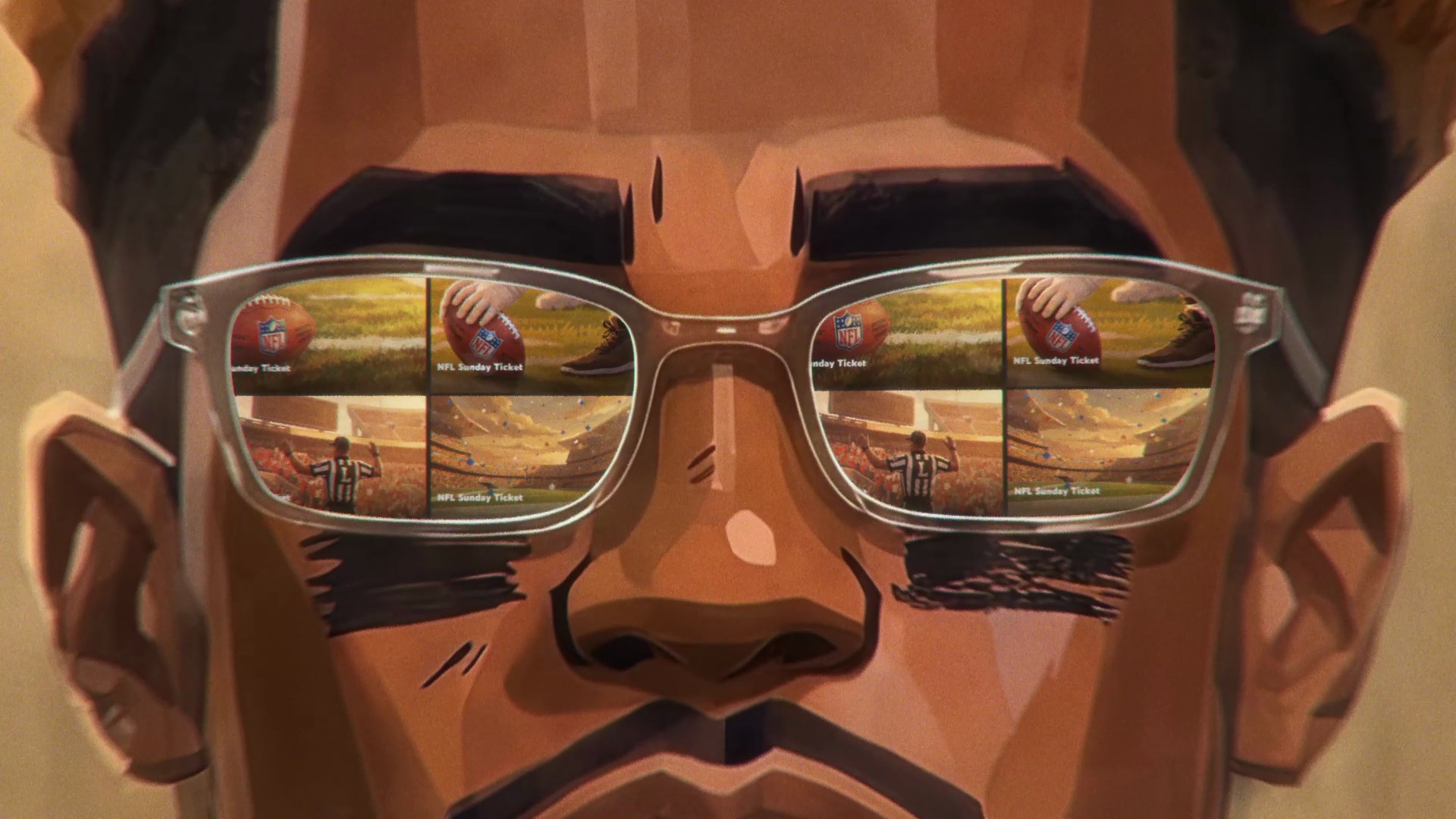
The game, reflected
Credits
Client
Verizon
Agency
MikeTeevee
Creative team
Adriel Teles
Dave Bell
Agency producers
Mel Taylor
Stacey Kawahata
Production company
LOBO
Creative director
Mateus de Paula Santos
Directors
Tiago Marcondes
Thiago Martins
Managing partner
Luis Ribeiro
Executive producer
Su Constantine
Head of production
Marcelo Barbosa
Head of post production
Eduardo Silva
Producer
Jules
Post-production producers
Eduardo Silva
Ricardo Vaz
Post-production coordinator
Rosangela Gomes
Coordinator assistant
Nathaly Lopes
Storyboard artist
Bruno Tedesco
Editors
Pedro Falcone
Bruno Ronzani
Style frames, AI
Wilson Panassi
Diego Rangel
Tiago Marcondes
Thiago Martins
Afonso Cardoso
Render, AI
Green
Thiago Martins
Tiago Marcondes
Motion graphics
Bruno Ronzani
Green
Murilo Coda
Compositing
Bruno Ronzani
2D concept art
Wilson Panassi
Débora Matsuda
Douglas Lopes
Sergio Faria
Research
Raphael Amário
Karin Cristina
Roger Marmo
Ingest, conform, delivery
Isabela Balbo
More work