Supercell / Game Campaigns / 2020 to 2025
Supercell Seven Films, Five Years
Mobile GamingCharacter DesignCG
Supercell / Game Campaigns / 2020 to 2025
Overview
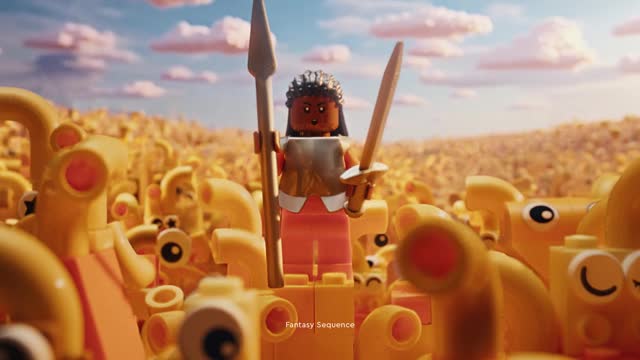
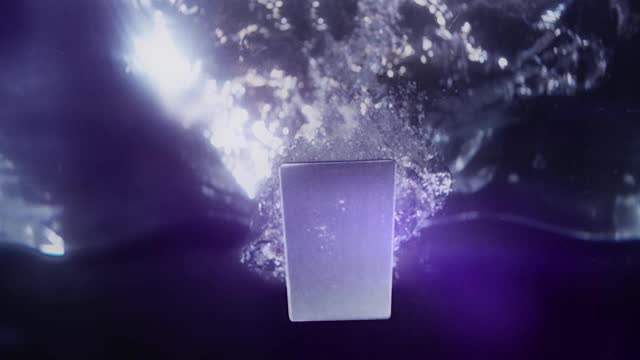
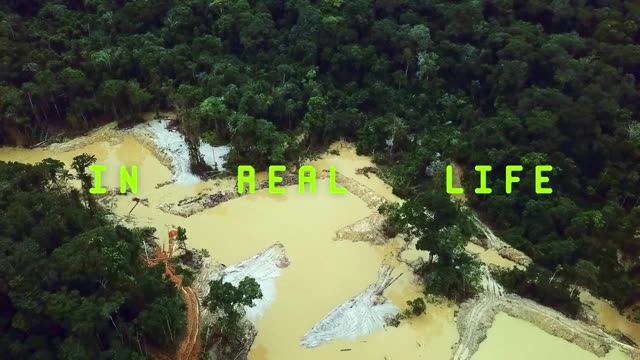
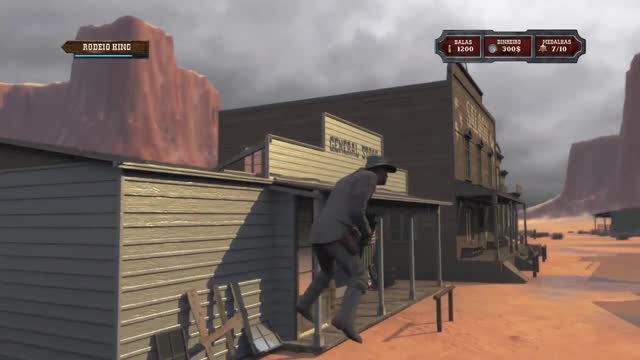
Supercell has come back to LOBO across five years and seven films, starting with Hay Day Pop in 2020 and running through Clash Mini and Clash. The work splits in two. There are the spots, which take the games out of the phone and put them somewhere with weather and dirt and a crowd. And underneath those there is the design, where the characters were specified against real material before a single frame was rendered.
The films
Hay Day Pop came first, two films built on the small pleasure of things falling into place. Clash Mini followed, and with it the whole design language of figures made from real material. It ran twice: once in a storm, and then again at Christmas, the same forty six second edit rebuilt in snow with candy cane markers and the cast in Santa hats. Flood is the most recent and the furthest from the phone.
The design
The Clash Mini figures were not designed as models. They were designed as things. Every sheet pins the drawing to photographs of real material: painted wood for the body, hessian for the cloth, beaten copper, coiled rope, hammered rivets. The same household broom appears on all three, cut differently each time. It is the Monk’s hair and moustache, the Shield Maiden’s hair, and the Swordsman’s purple tail. The Swordsman’s fish was photographed too, a real silver sardine, before it became a weapon. Designing against real material is what stops a CG character feeling weightless, because it gives the render something true to aim at. The same sheets carry the articulation, so the elbow, wrist and fingers were settled in the same pass as the surfaces.
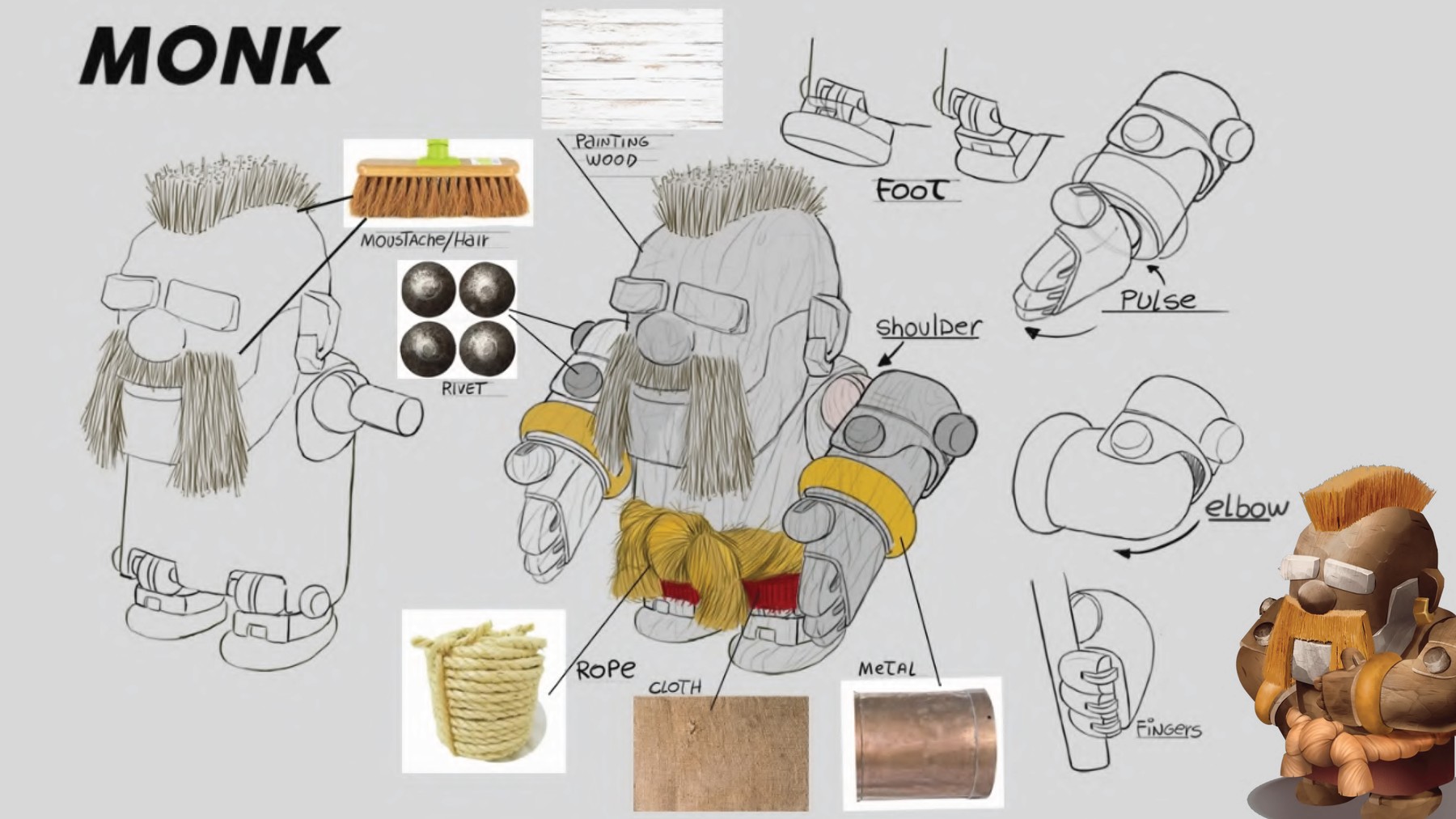
The Monk. Broom for the hair, rope, rivets, hessian, copper
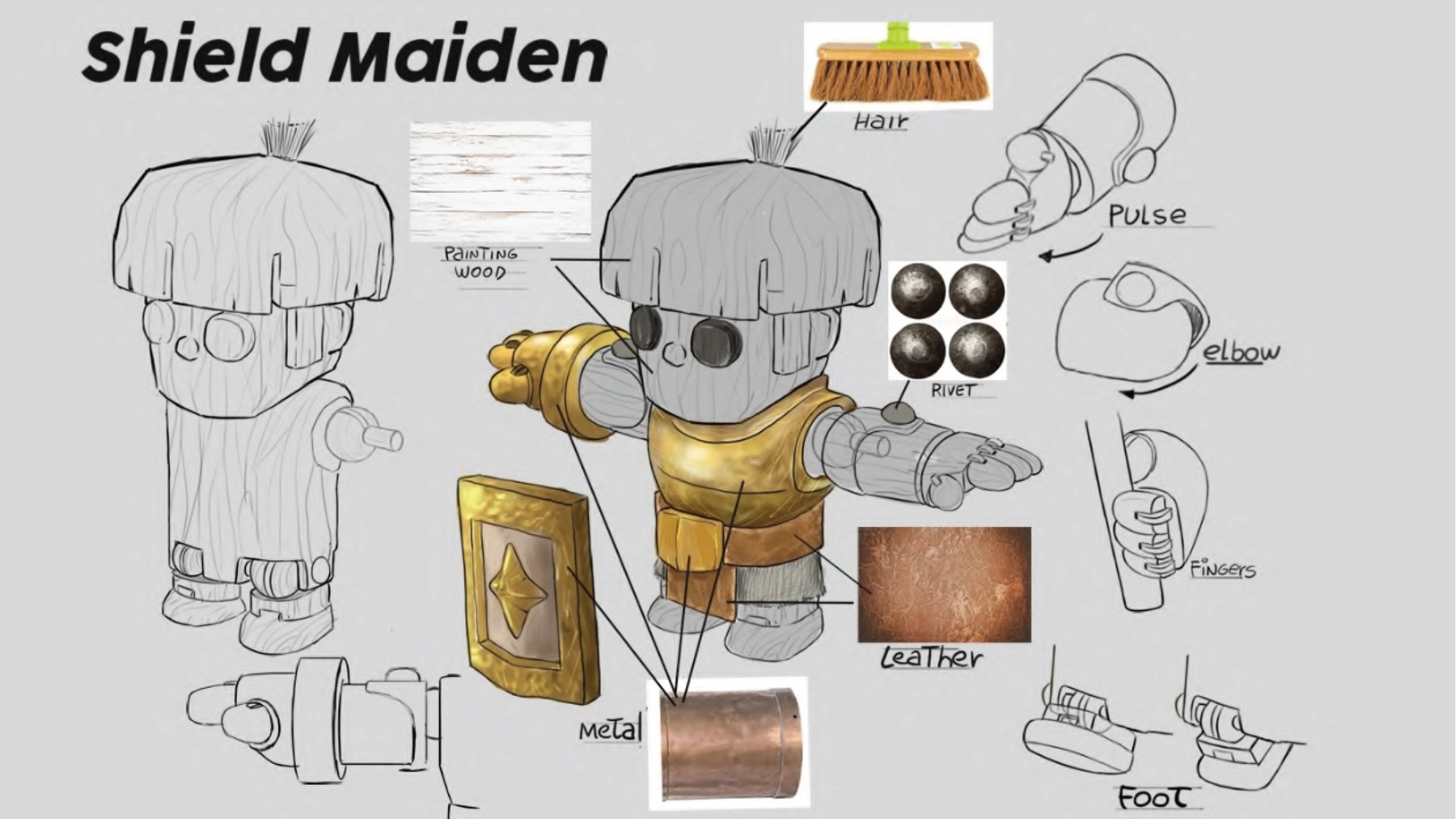
Shield Maiden. The same broom, cut short
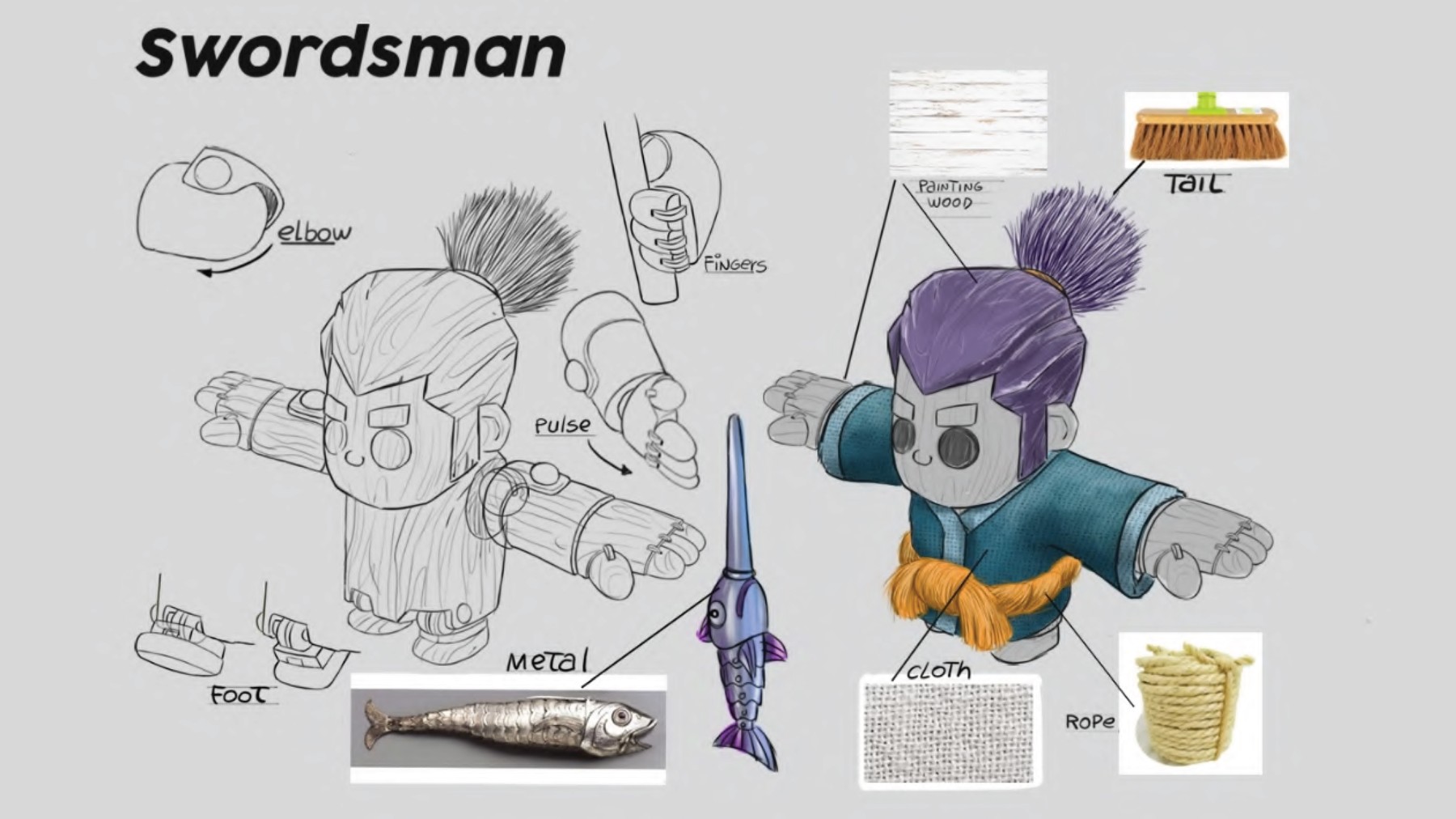
Swordsman. The broom dyed purple, and a real sardine
The board
The same rule ran through the board the figures stand on. Every surface was picked from a real reference and called out before anything was modelled: wood for the frame, felt for the field, cloth, leather, rock. It is the difference between a game board on a screen and a game board on a table.
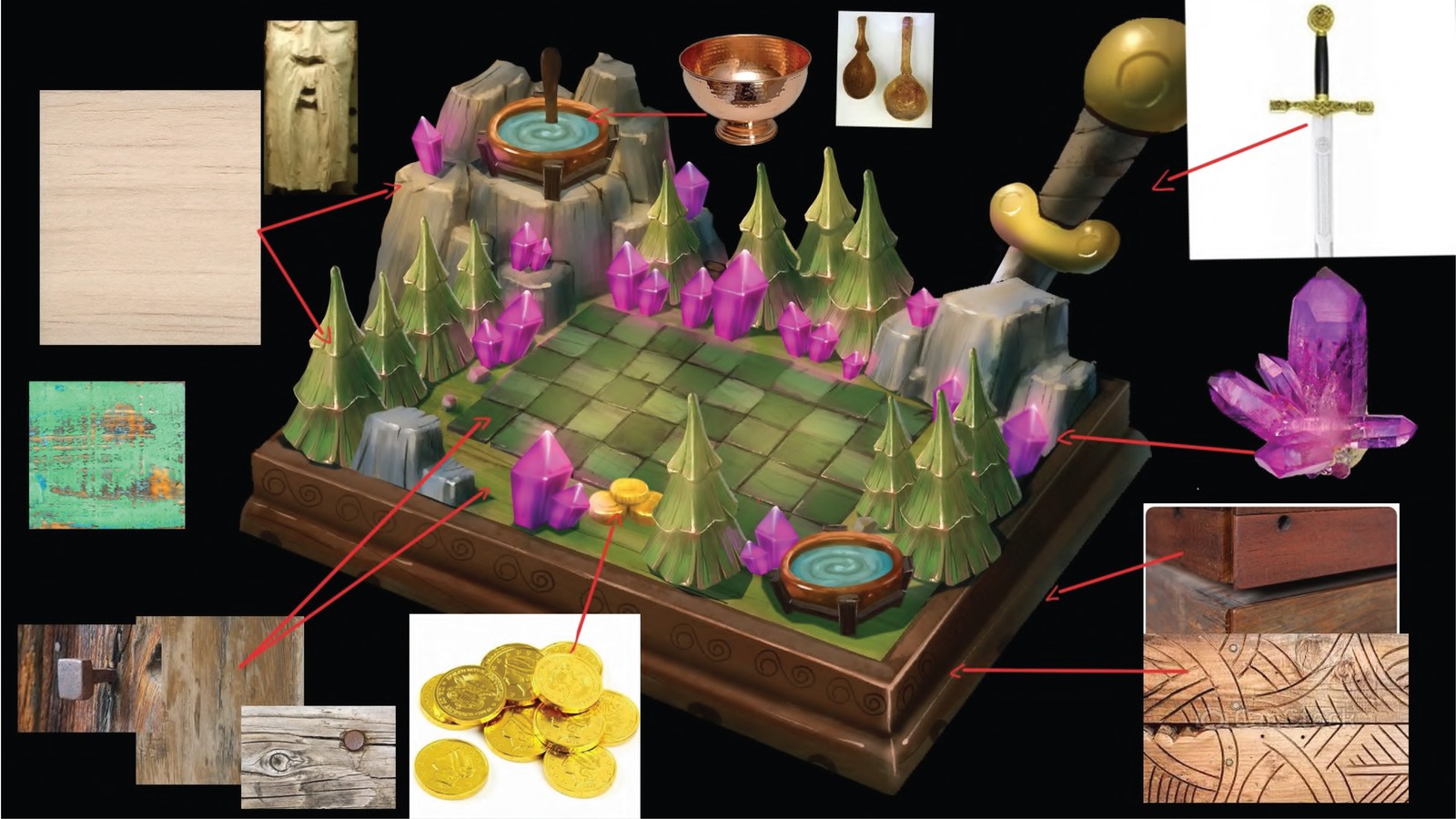
Every surface answered for
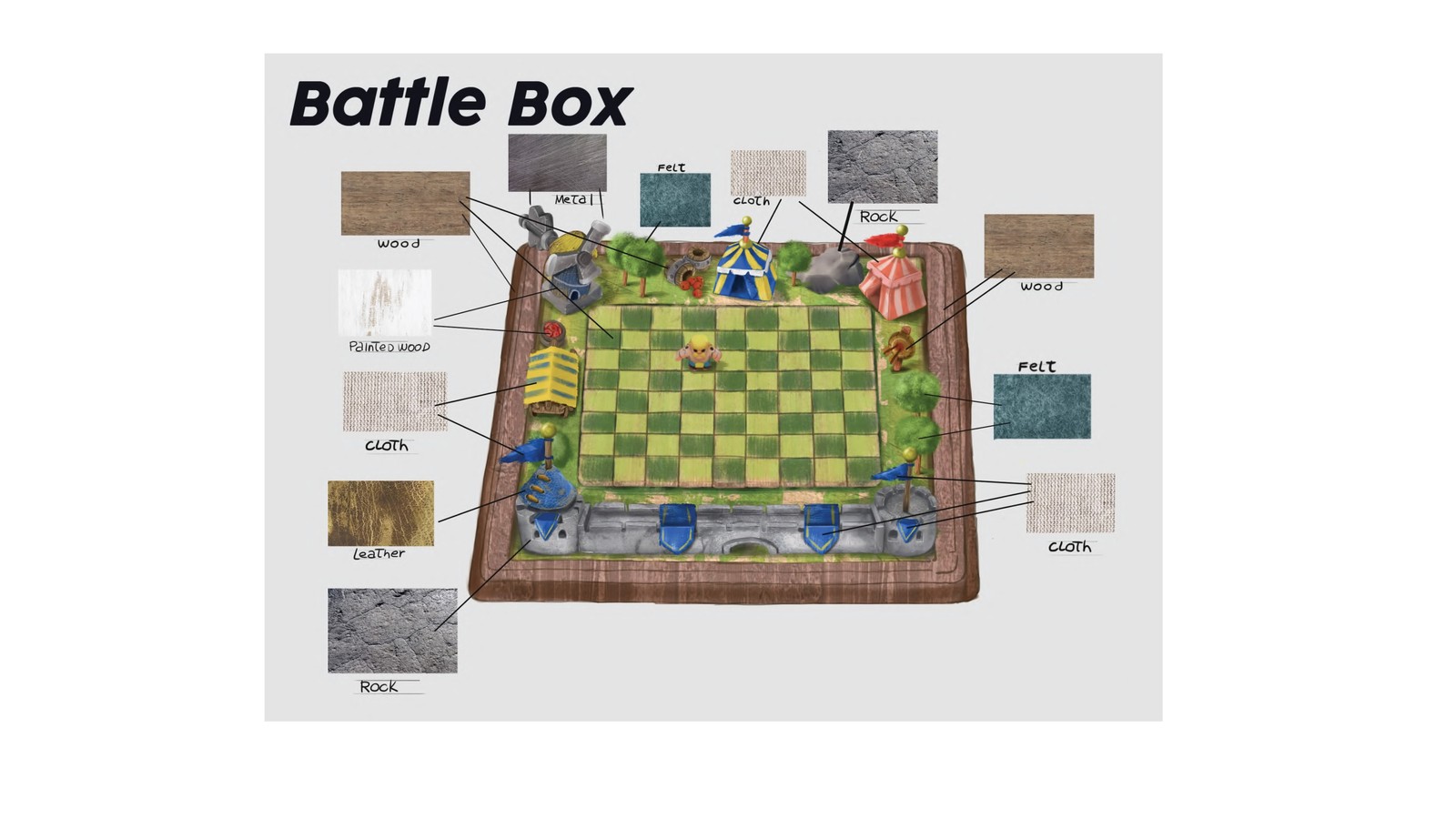
The board as an object
The cast
Away from the films the cast was staged on a single grey and lit as if for a shelf. No arena, no interface, no particle effects to hide behind. Which means every pose has to carry from silhouette alone, and every material has to hold up with nothing happening around it. The poses were cut together as films of their own, which is the version below.
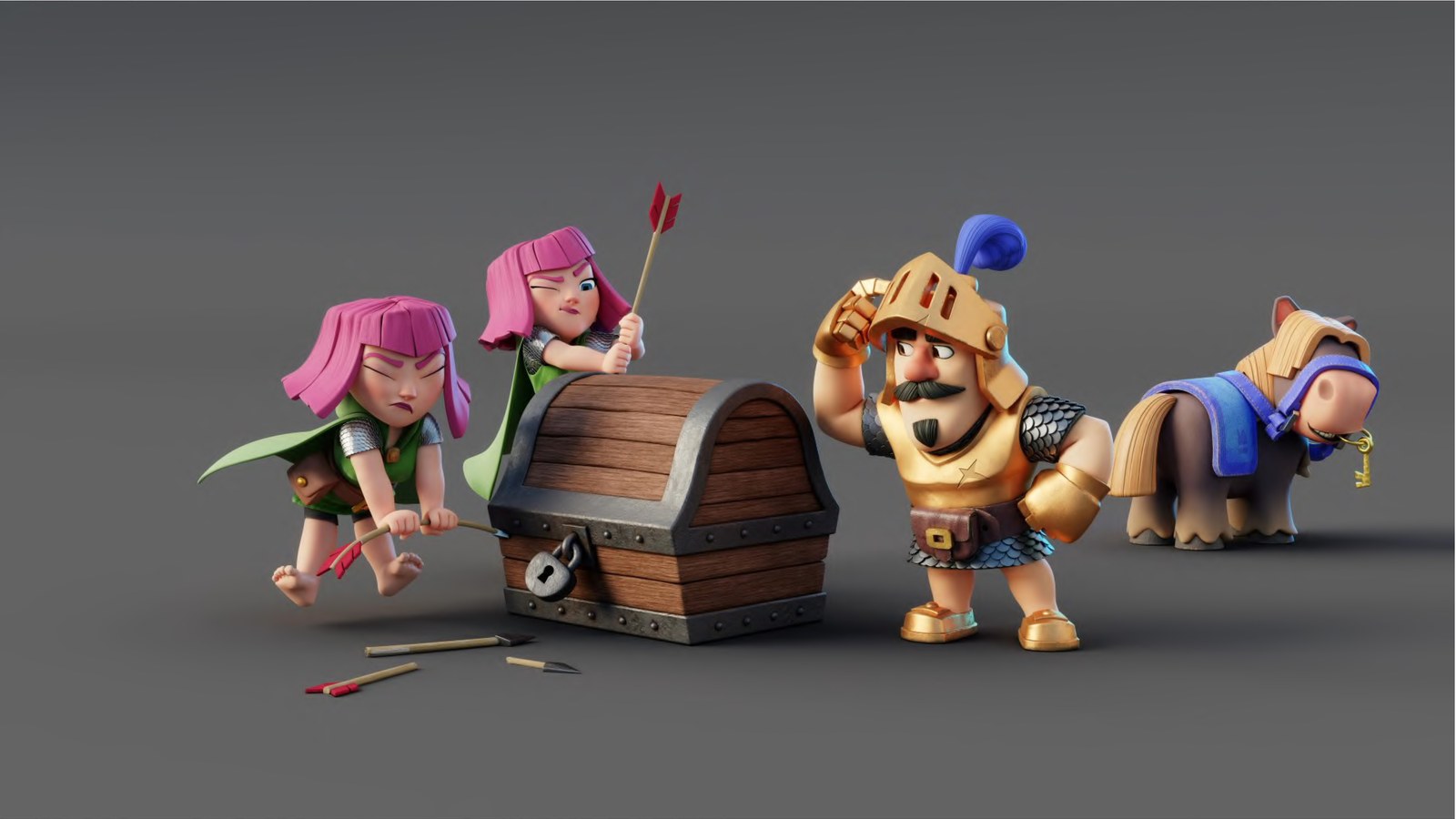
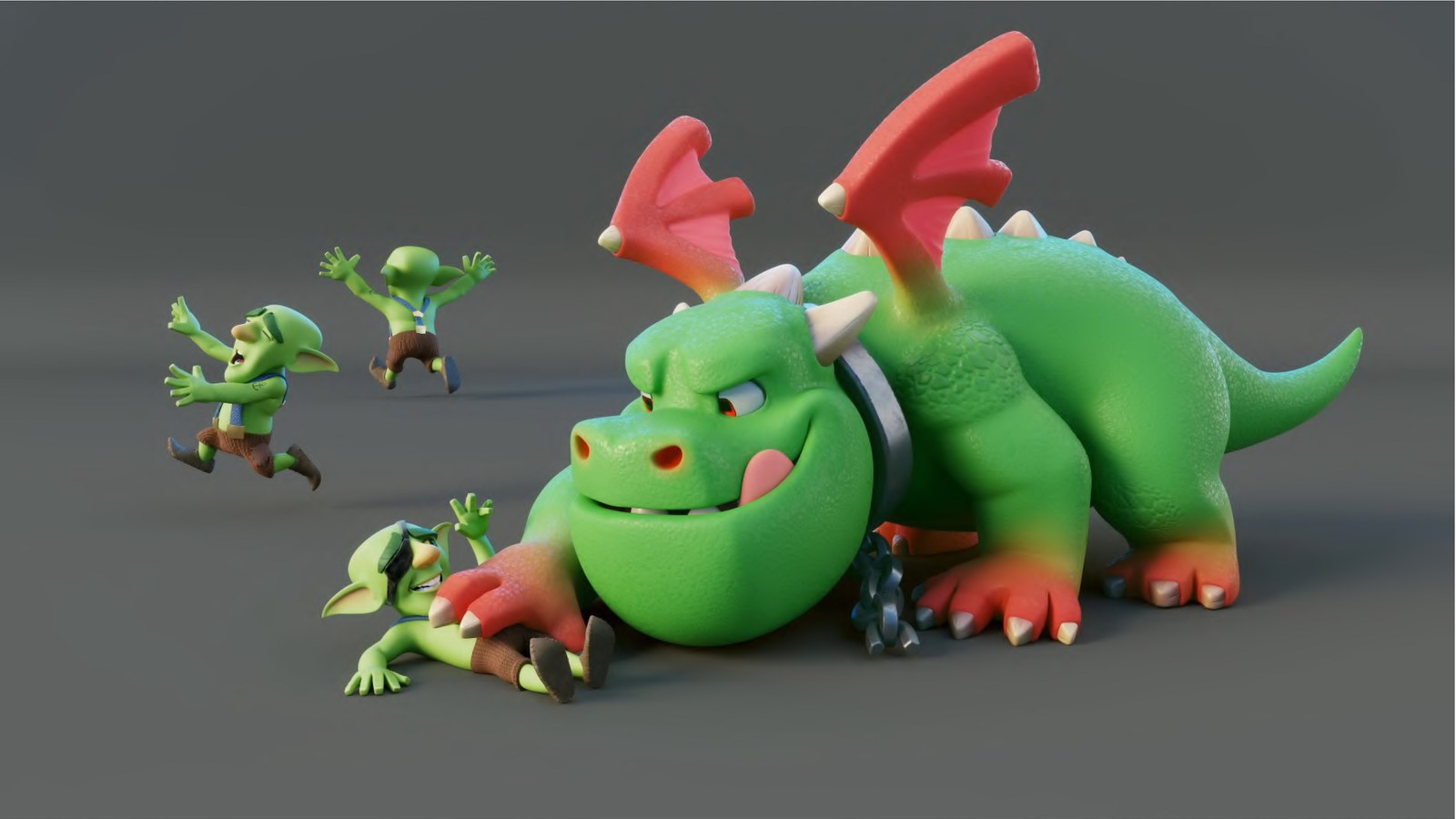
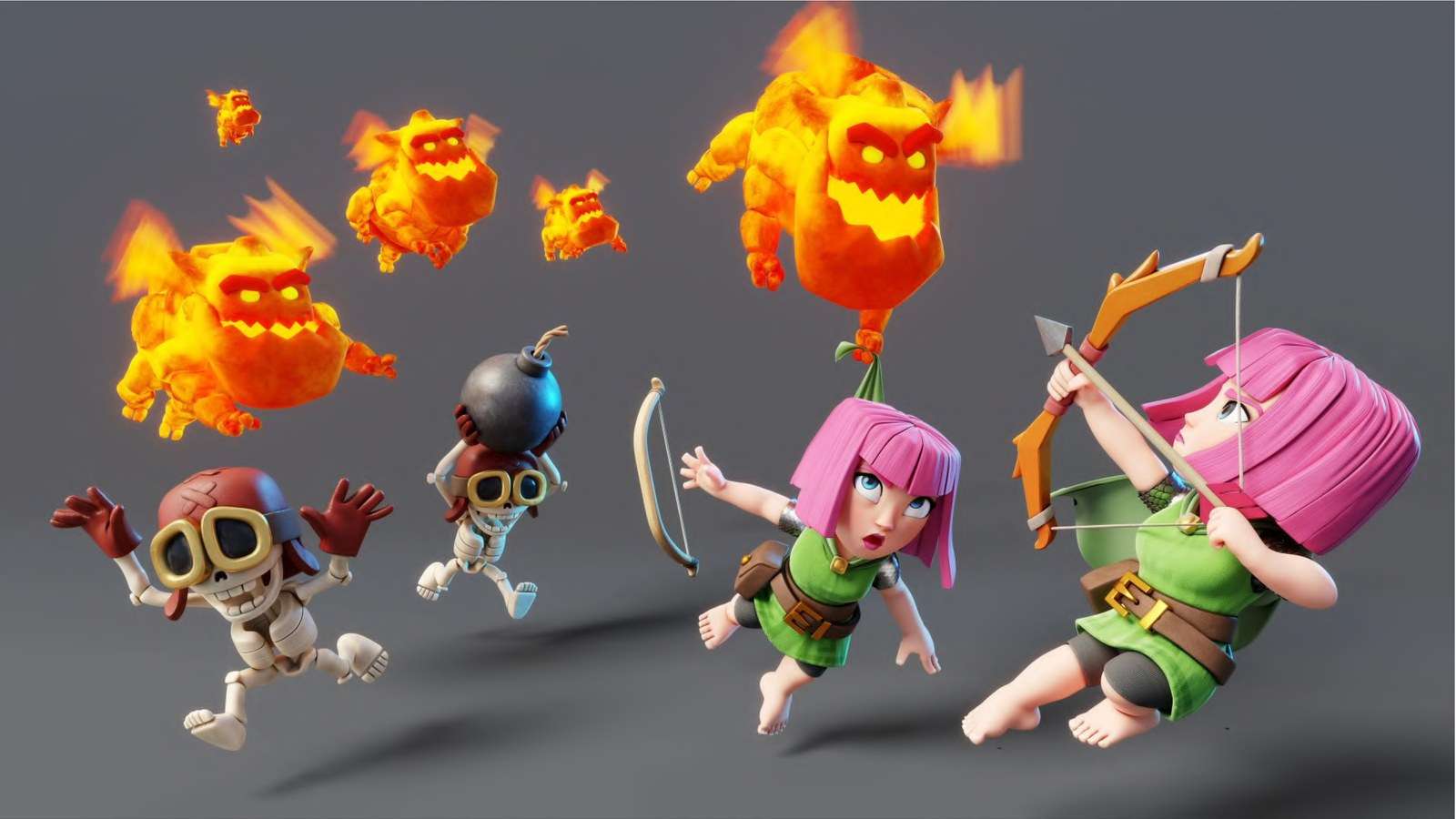
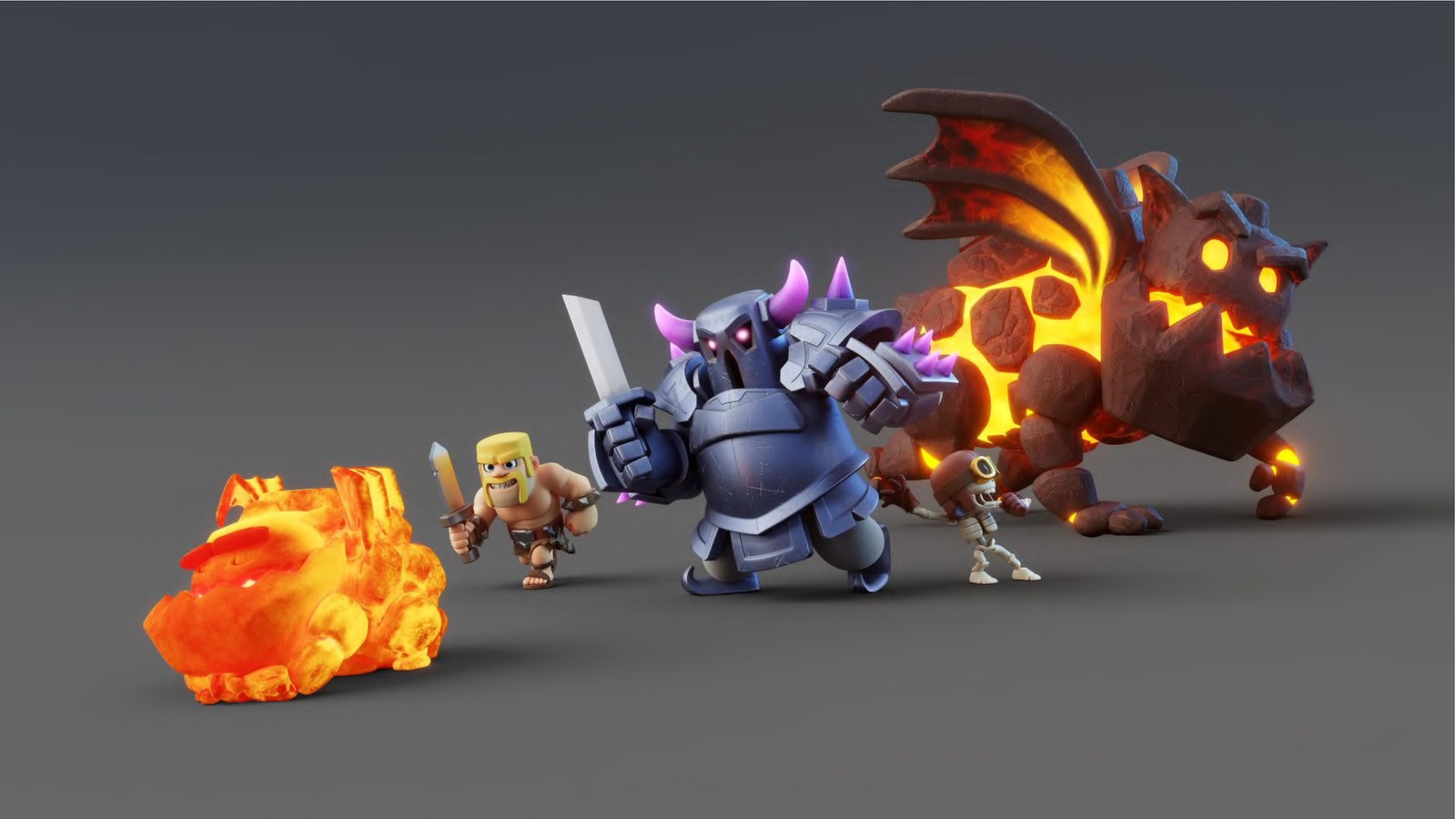
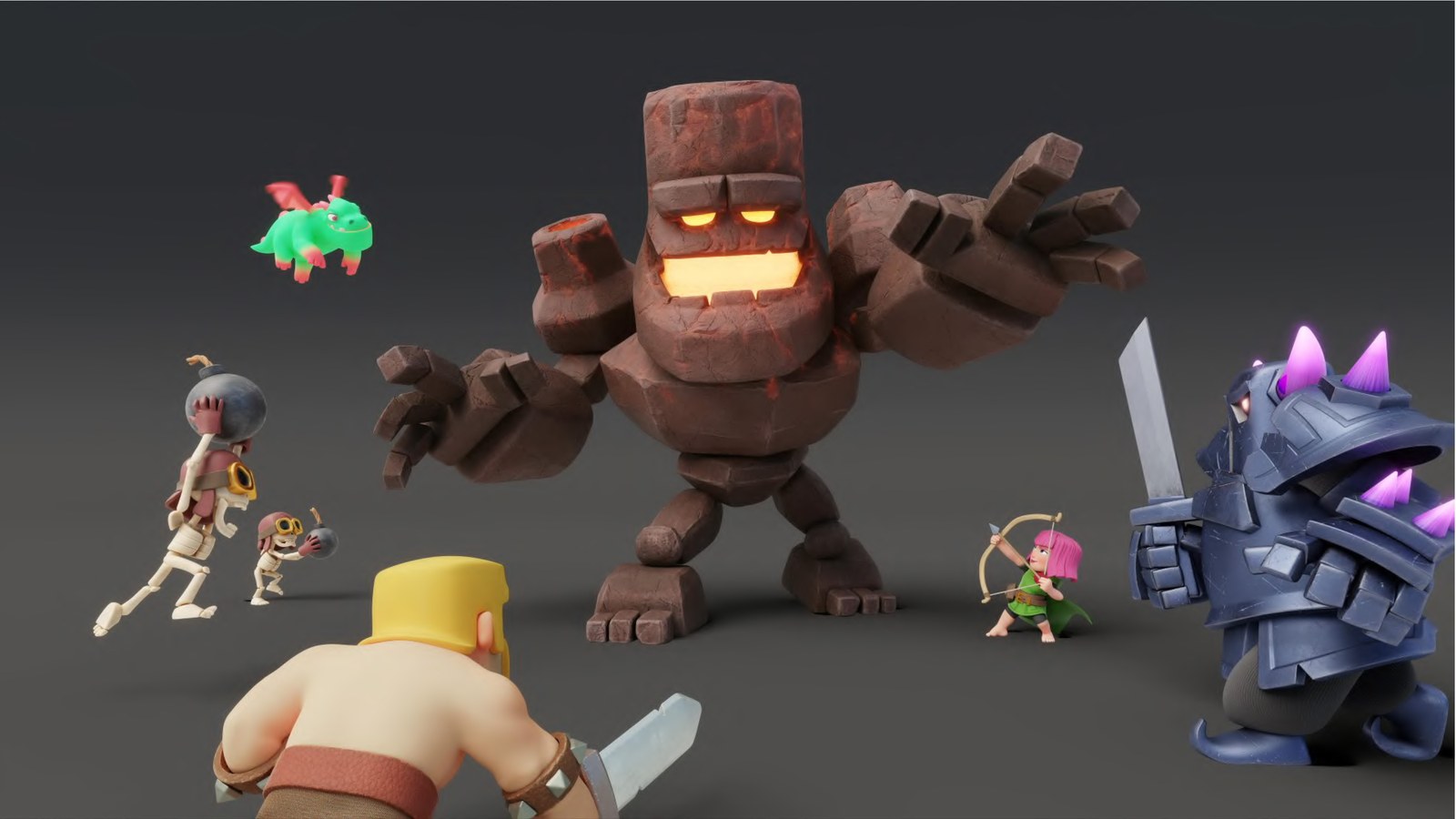
In the world
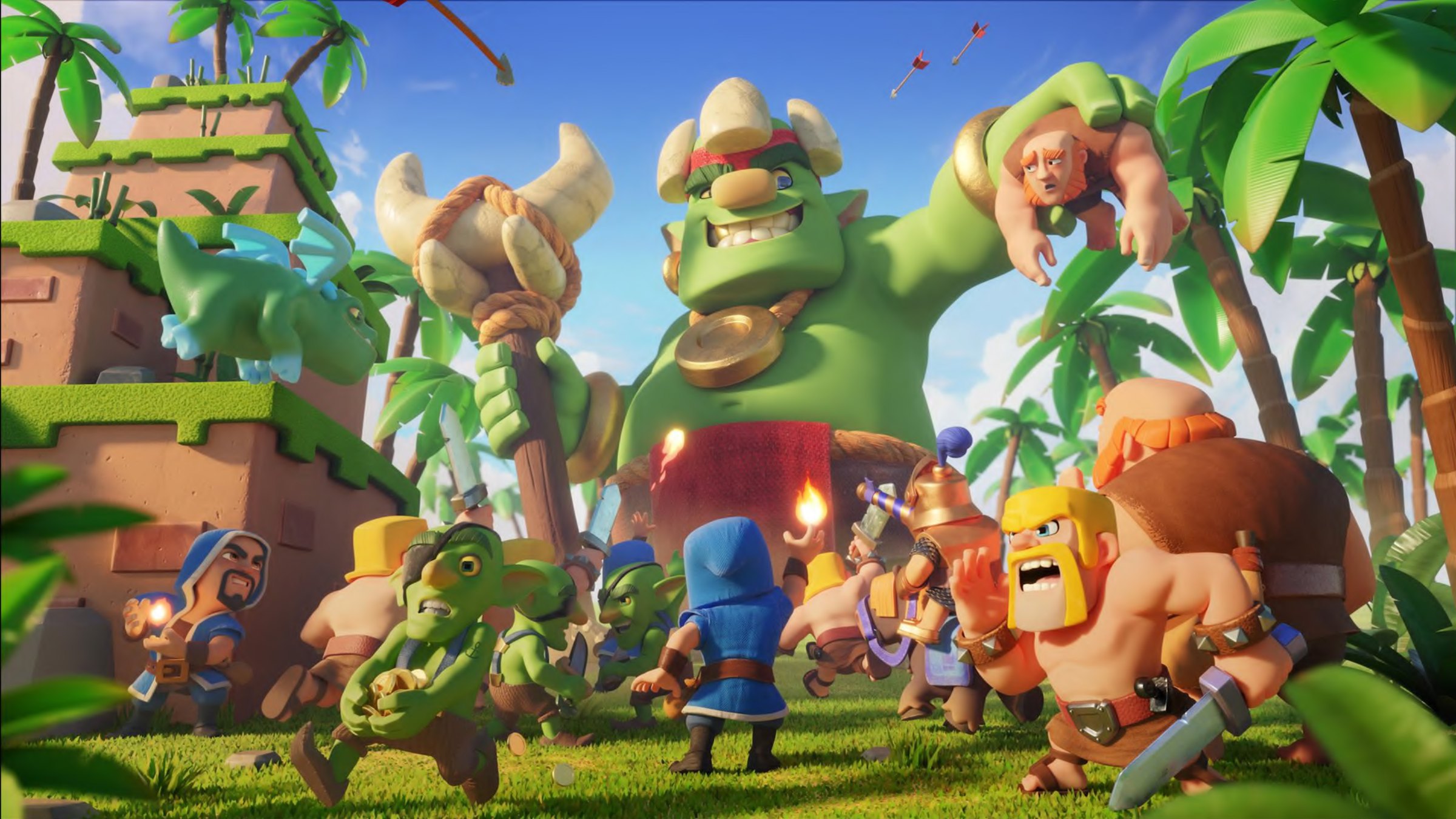
The films put all of it into weather and crowd. The same figures that were photographed against grey end up in a stadium, in a jungle village, under attack, at a scale where the material work is what keeps them readable.
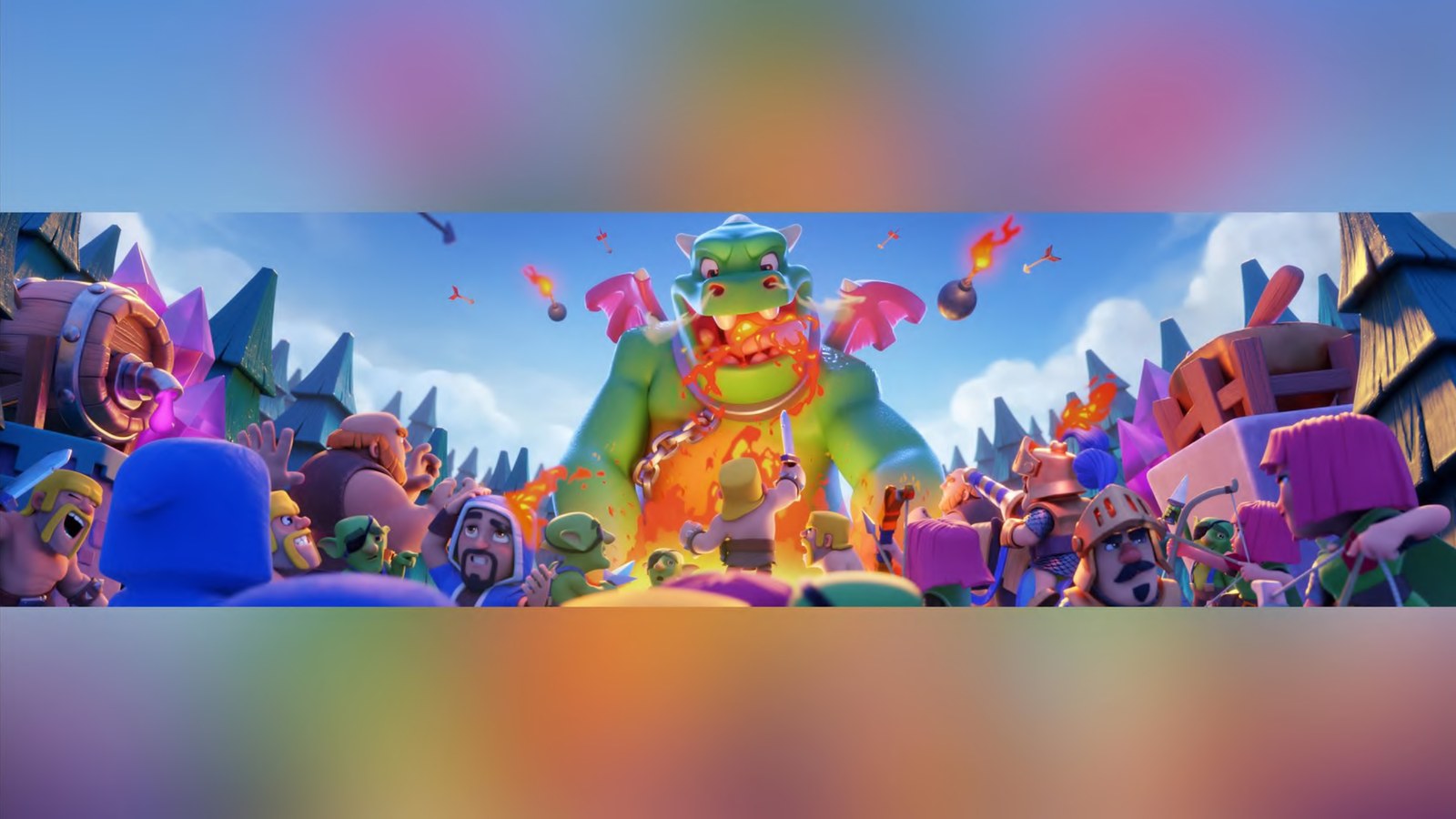
The arena
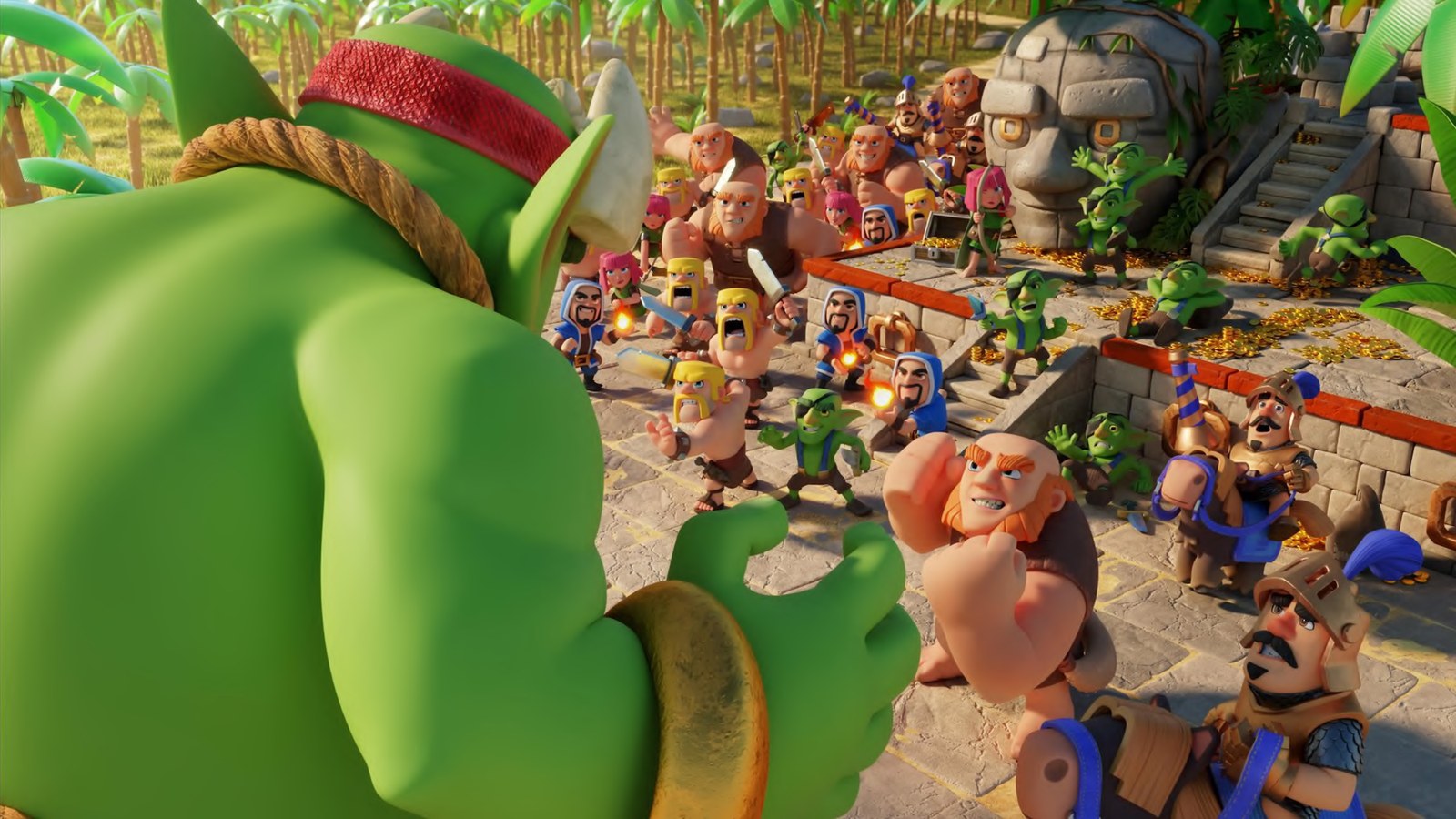
Scale, held together by material
Credits
Client
Supercell
Production company
LOBO
Directors
Mateus de Paula Santos
Franck Falgueyrac
Executive producer
Luiz Ribeiro
Account
Susan Constantine
Post-production coordination
Clara Morelli
Rosangela Gomes
Cristiane Santos
Post coordination assistant
Bruna Boretto
Head of 3D
Fabio Shiguemura
3D coordination
Lucas Lira
Diego Esteves
Animation coordination
Graciliano Camargo
Jorge Zagatto Neto
Animation
Sté Kajimoto
Daniel Bahia
Modelling coordination
Tiago Mesquita
Modelling
Nathan Zuanaci
Tiago Mesquita
Adam Pierre
Rigging
Flavio Castello
Felipe Gimenes
Henrique Ribeiro
Look development
Rafael Tomazzi
George Damiani
Diego Esteves
Mauricio Pirillo
Thiago Peretto
Adam Pierre
Finishing
Karen de Moura
Finishing assistants
Beatriz Brandão
Melina Prior
Credits as filed on the Clash Mini ficha técnica. A second page listing sound and finishing crew was not recoverable from the source file.
More work